
English Pronunciation Trainer
- #E-learning
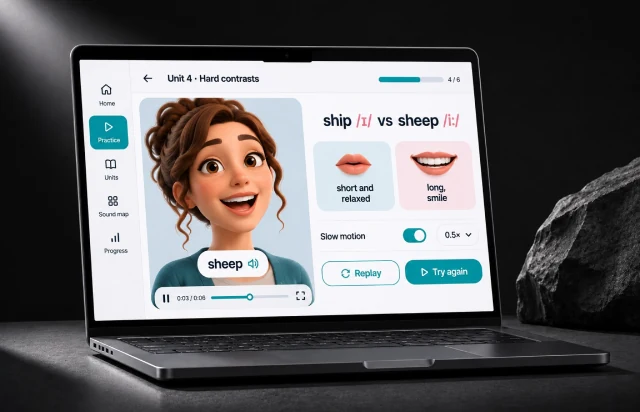
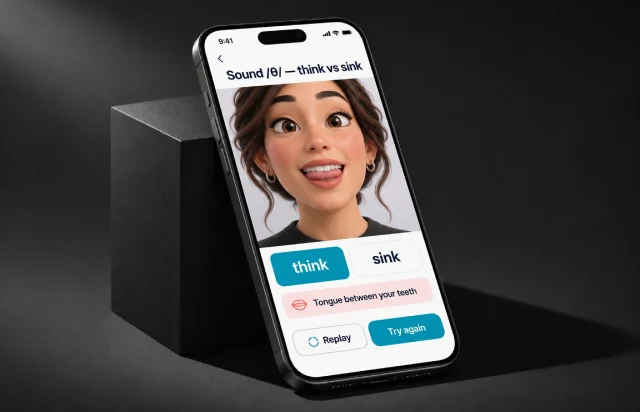
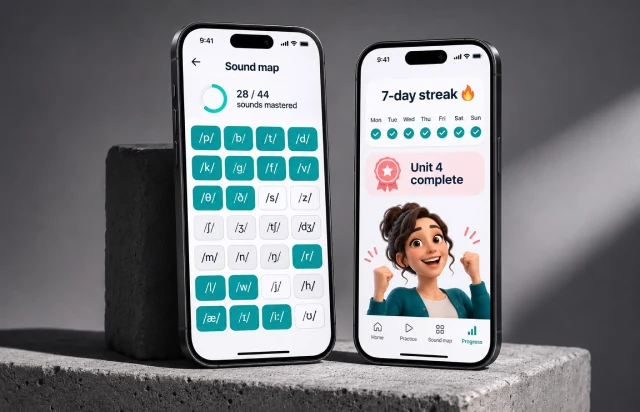
An English pronunciation trainer for an EU EdTech startup: a speaking character with a TTS voice and lip-synced mouth shows learners how each of the 44 English sounds is formed. It runs on iOS, Android and the web, and 12,000+ learners practice with it every month.
- Mobile
- Web
You can learn more about the project at this link
Impact
The startup ran a web course with text lessons and pre-recorded audio. Only 38% of learners finished the speaking block, and every batch of new audio took about two weeks of studio time. A team of eight built the trainer in about 11 months: three weeks of discovery and 24 two-week sprints.
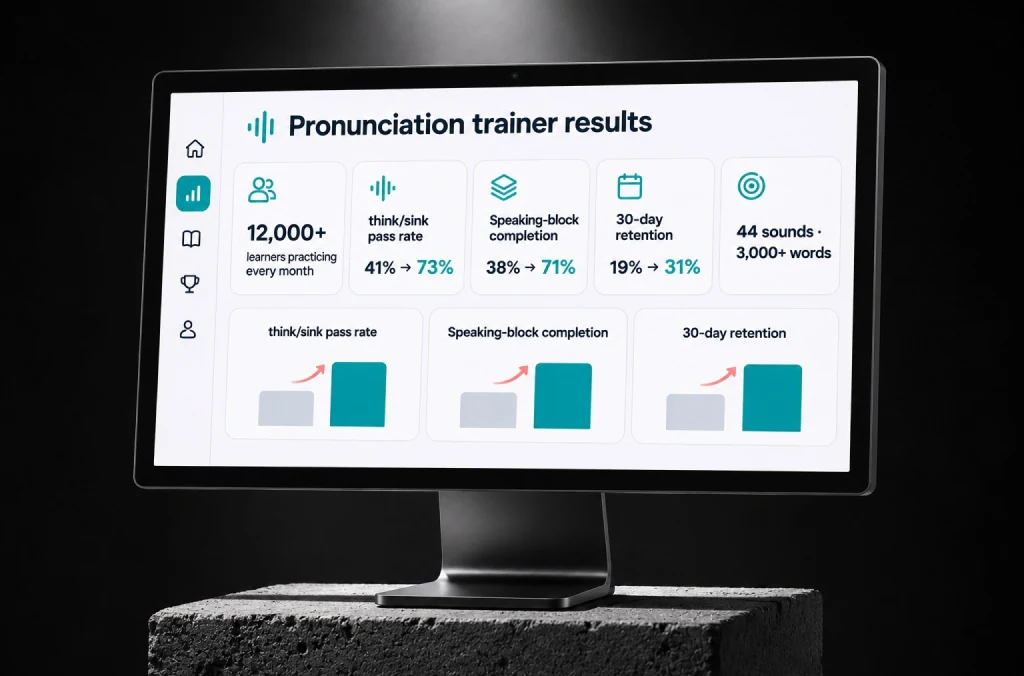
Speaking-block completion rose to 71%, the "think/sink" pass rate from 41% to 73%, 30-day retention from 19% to 31% and free-to-paid conversion from 4.1% to 6.8%. New words are voiced and animated the same day for under $0.01 each, about 300 a month instead of 40.
Services we provided
– Product Design
– Software Development
– AI/ML
– Full Cycle QA
Tech Stack

React Native

Node.js

Python

Redis
Challenges and Solutions
🧐 Challenges
If your first language has no "th", your ear files it under "s" or "f". Audio alone cannot show how a sound is made:
- Speaking was a "listen and repeat" block at the end of each unit, disconnected from the lesson vocabulary.
- No per-sound data and no control over how sounds were taught.
- Recording did not scale: about $1 and two weeks per batch, roughly 40 new words a month.
💡 Solutions
Instead of recording a human teacher, one AI coach that can say any word in the course. React Native apps, a web client and a Node.js backend, with Redis caching audio:
- Text-to-speech for every word, phrase and sound, generated in under 2 seconds.
- Lip-sync with 21 mouth shapes kept within 40 ms of the audio.
- Six speaking styles set through SSML.
- Visual cues for lips, tongue and jaw on the second failed attempt.
- Practice tied to each unit's vocabulary.
- Per-sound analytics and a freemium model.
8
people worked
~11
months of work
12,000+
learners a month