
Irrigation Management Software
- #IoT
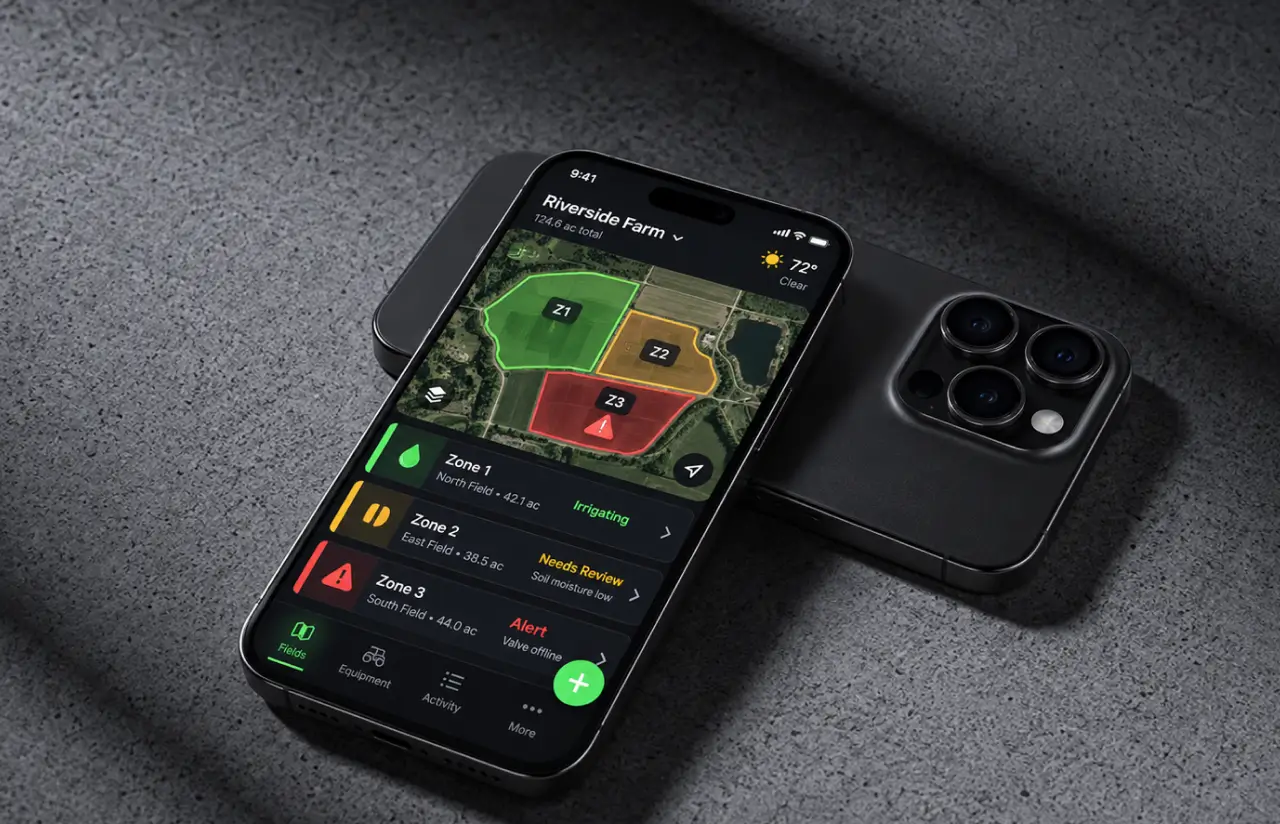
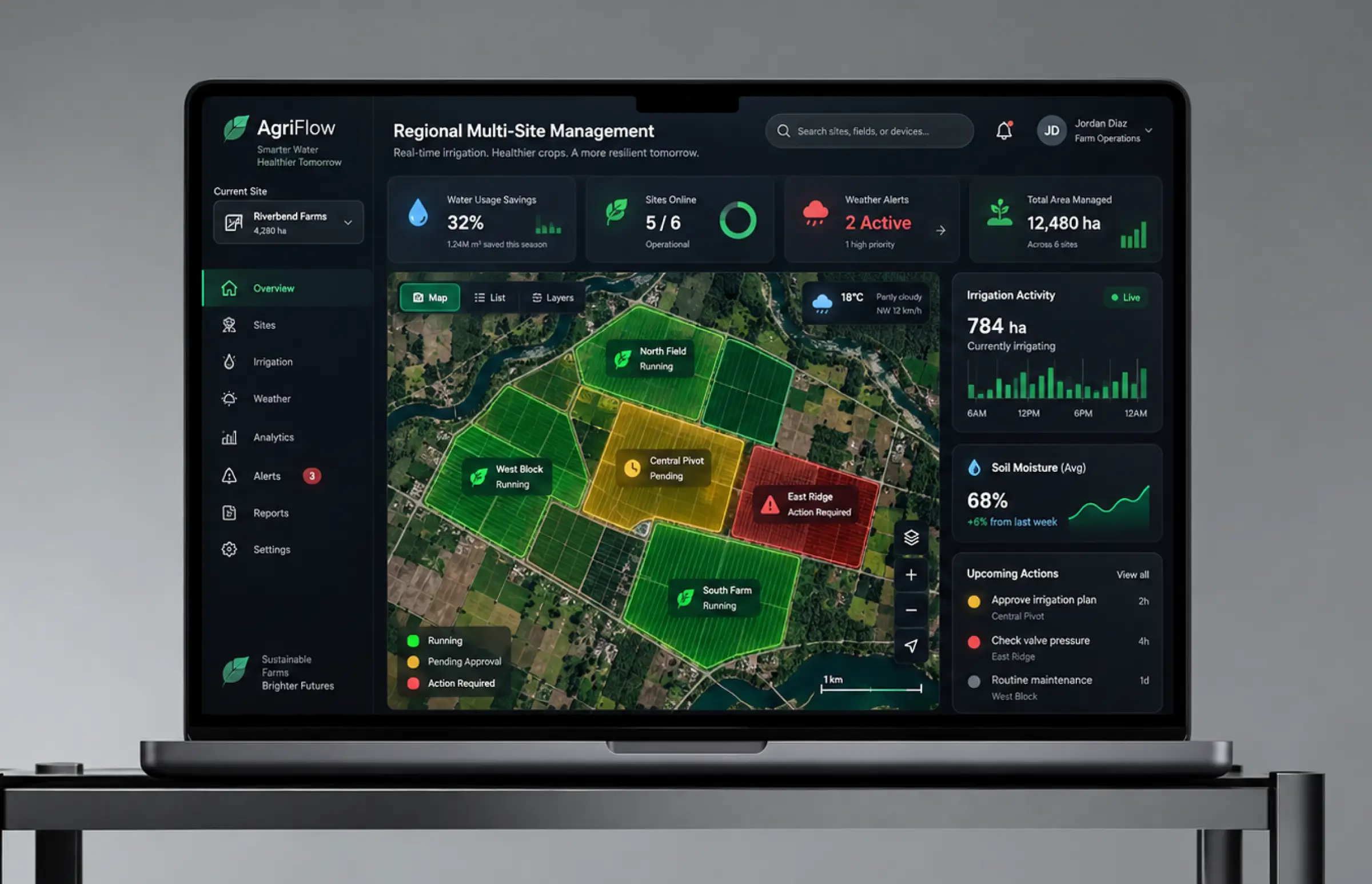
An AI-powered irrigation management platform for Scotts Miracle-Gro. One platform runs every controller, valve and sensor across about 60 farm sites: soil moisture, weather data and crop type set the watering schedules, and crews control zones from iOS and Android apps while managers work in a web dashboard.
- Admin
- Mobile
- Web
You can learn more about the project at this link
Impact
Scotts Miracle-Gro needed one platform to replace fragmented, legacy irrigation control. Controllers already sat on about 60 farm sites in three states, but each site watered on a fixed calendar, crews adjusted timers by hand, and a backend change took about two weeks to ship. LITSLINK did the product design, software development, full-cycle QA and publishing over 12+ months.
Water use fell by roughly 28% per season across pilot sites, cloud spend is about 35% lower, and the platform manages 40K+ connected controllers with 99.9% uptime. Releases went from about two weeks to same-day, and support tickets about watering dropped by around 40% in the first six months.
Services we provided
– Product Design
– Software Development
– Full Cycle QA
– Publishing
Tech Stack

Python
Challenges and Solutions
🧐 Challenges
What was missing was a server side that could talk to every controller at once, with remote monitoring in one place:
- Water usage prediction: calendar schedules ignored soil moisture, weather and crop stage, so some zones took 20–30% more water than they needed.
- Unifying hardware and software: controllers, sensors and weather stations came from four vendors with different protocols and dashboards.
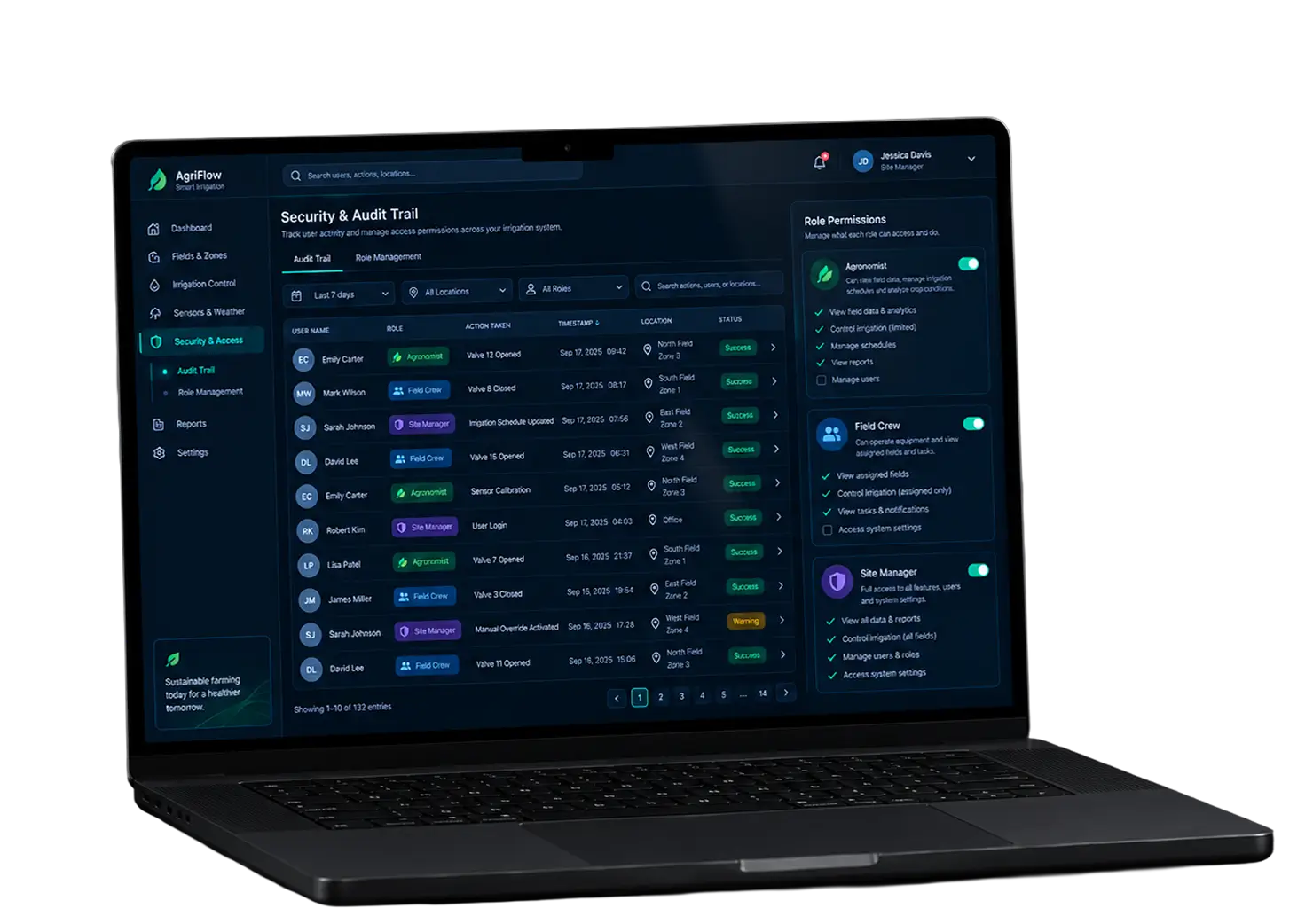
- Roles and data security: shared logins gave everyone the same access to valves, with no audit trail.
💡 Solutions
We built the platform around one question: what does an operator need to see before they trust a machine to open a valve? Python services on Kubernetes, LoRaWAN and MQTT for devices, PostgreSQL, Terraform and GitLab CI/CD on AWS:
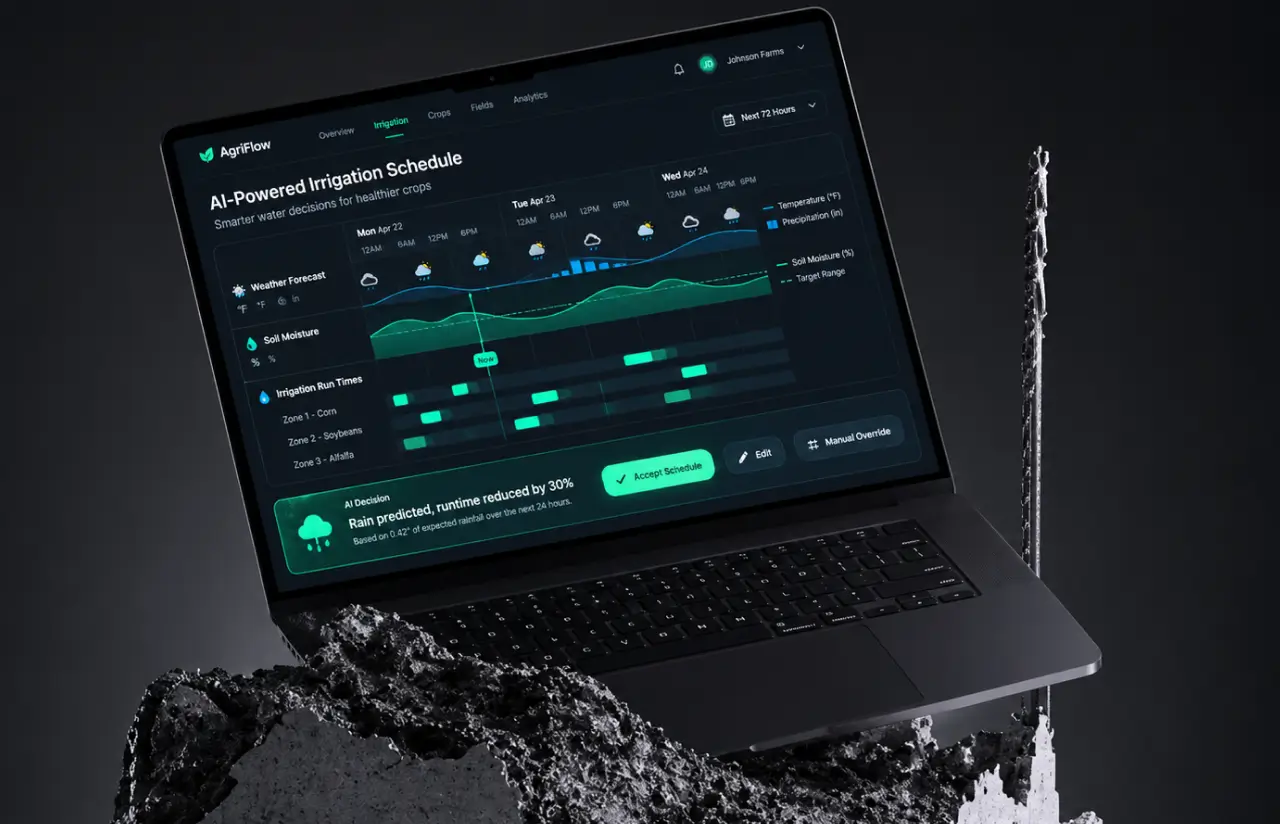
- AI-powered water scheduling from soil moisture, a 72-hour forecast and crop stage, rebuilt every night with the reasoning shown.
- Real-time monitoring of valve state, flow and pressure, with alerts within about 60 seconds.
- iOS and Android apps for field crews and a web dashboard for managers and agronomists.
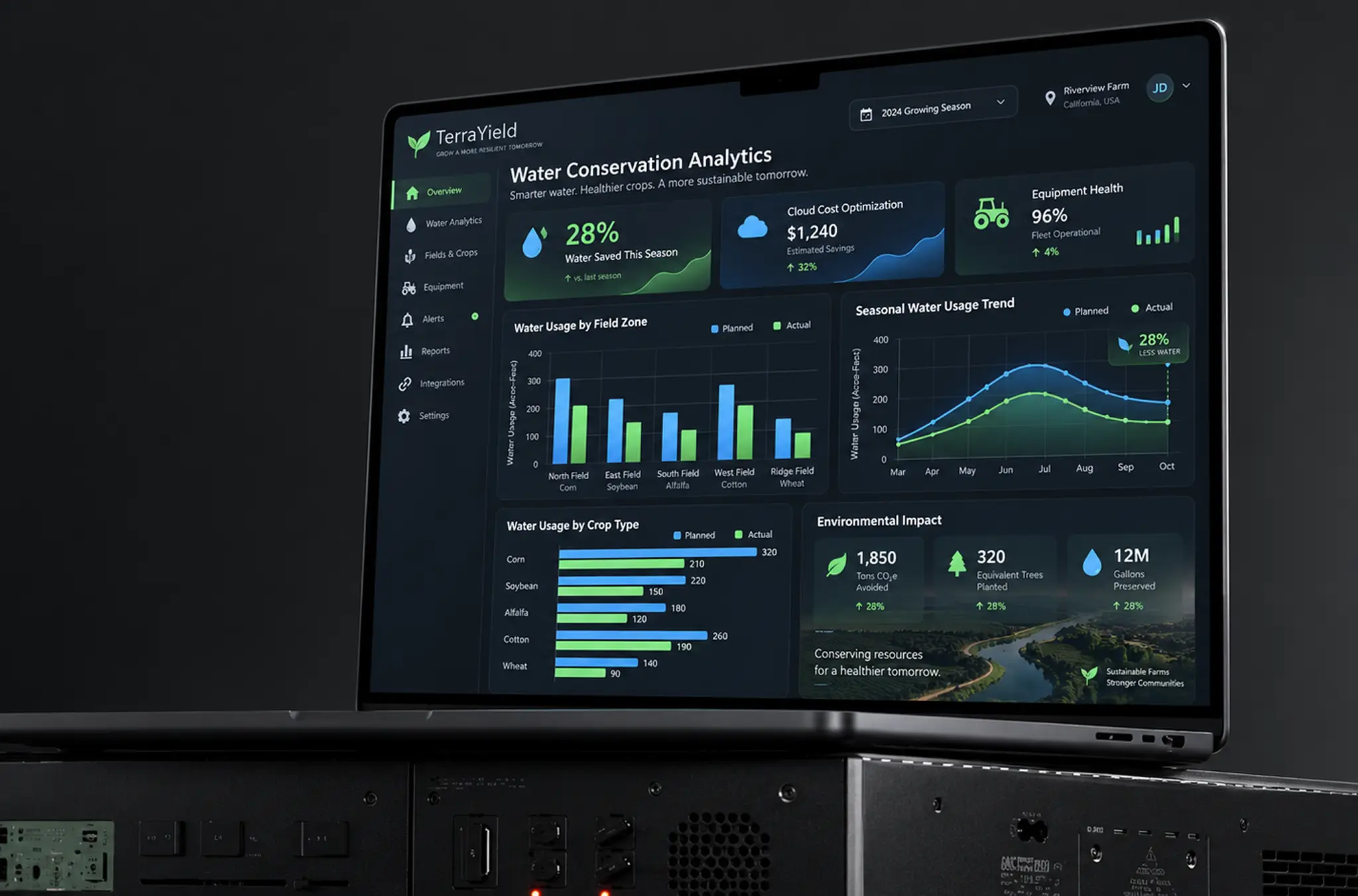
- Water conservation analytics: planned versus actual usage by zone, crop and week.
- Multi-site management with per-site roles and a full log of every command.
- A hardware integration layer for controllers from four vendors.
8
people worked
12+
months of work
40K+
connected controllers