
On-Call Scheduling Software
- #Productivity
On-call scheduling software for a US operations and engineering company, on the web and on iOS and Android. It automates shift rotations, routes incidents through multi-channel alerts and gives distributed teams a single source of truth for who is on call right now.
- Mobile
- Web
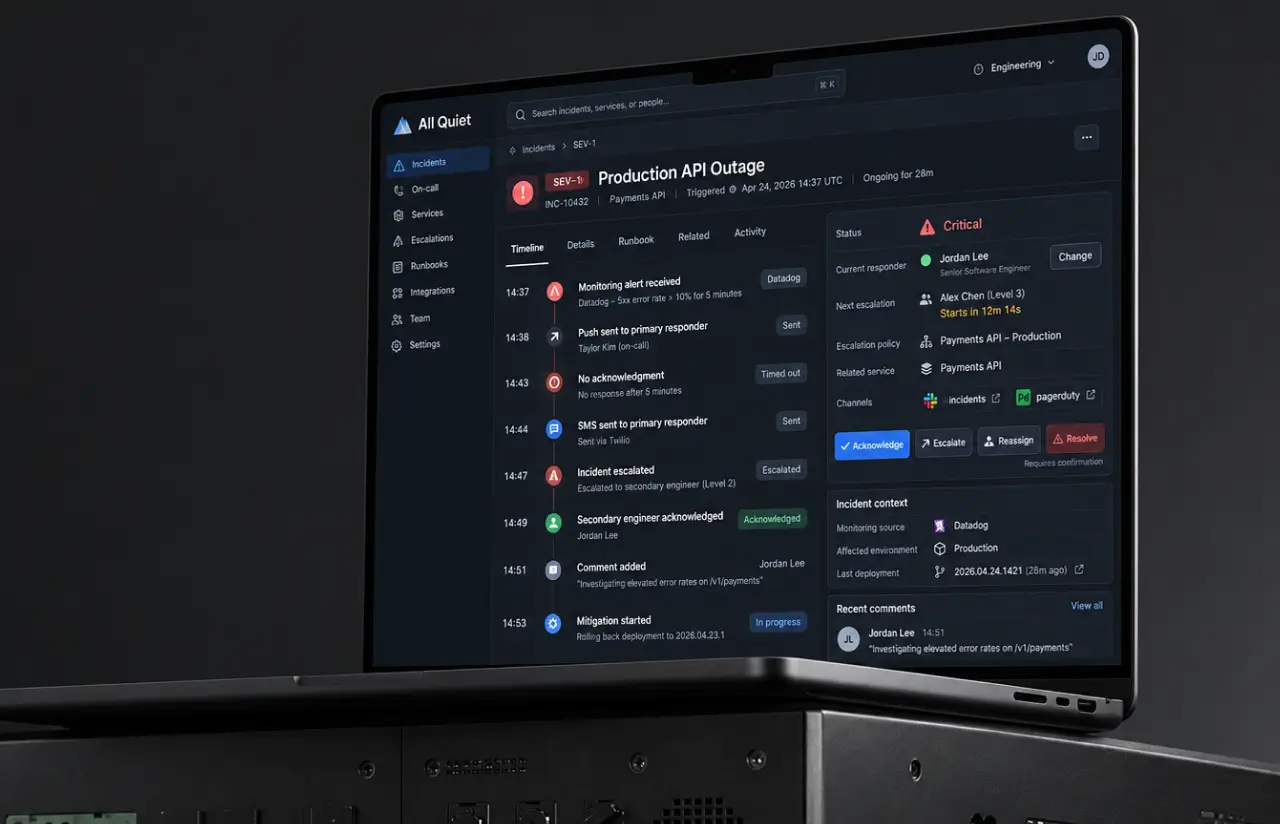
You can learn more about the project at this link
Impact
The client runs incident response for a US operations and engineering organization with staff in three time zones. Its alerting app was already live on iOS and Android, but the on-call schedule lived in a spreadsheet and a pinned Slack message, and about one night alert in five went unanswered for more than 15 minutes. LITSLINK did the product design, development, full-cycle QA and integrations over 10+ months.
After launch, median incident response is 60% faster, under 2% of alerts stay unacknowledged past the first escalation step, and the platform has held 99.9% uptime. Managers who tested the prototype built a monthly schedule in about 4 minutes instead of roughly 40.
Services we provided
– Product Design
– Software Development
– Full Cycle QA
– Platform Integration
Tech Stack

React.js

Node.js

Mongo DB

Redis

Firebase
Challenges and Solutions
🧐 Challenges
About 40 engineers across five departments took on-call duty in weekly blocks, and the existing setup could not keep up:
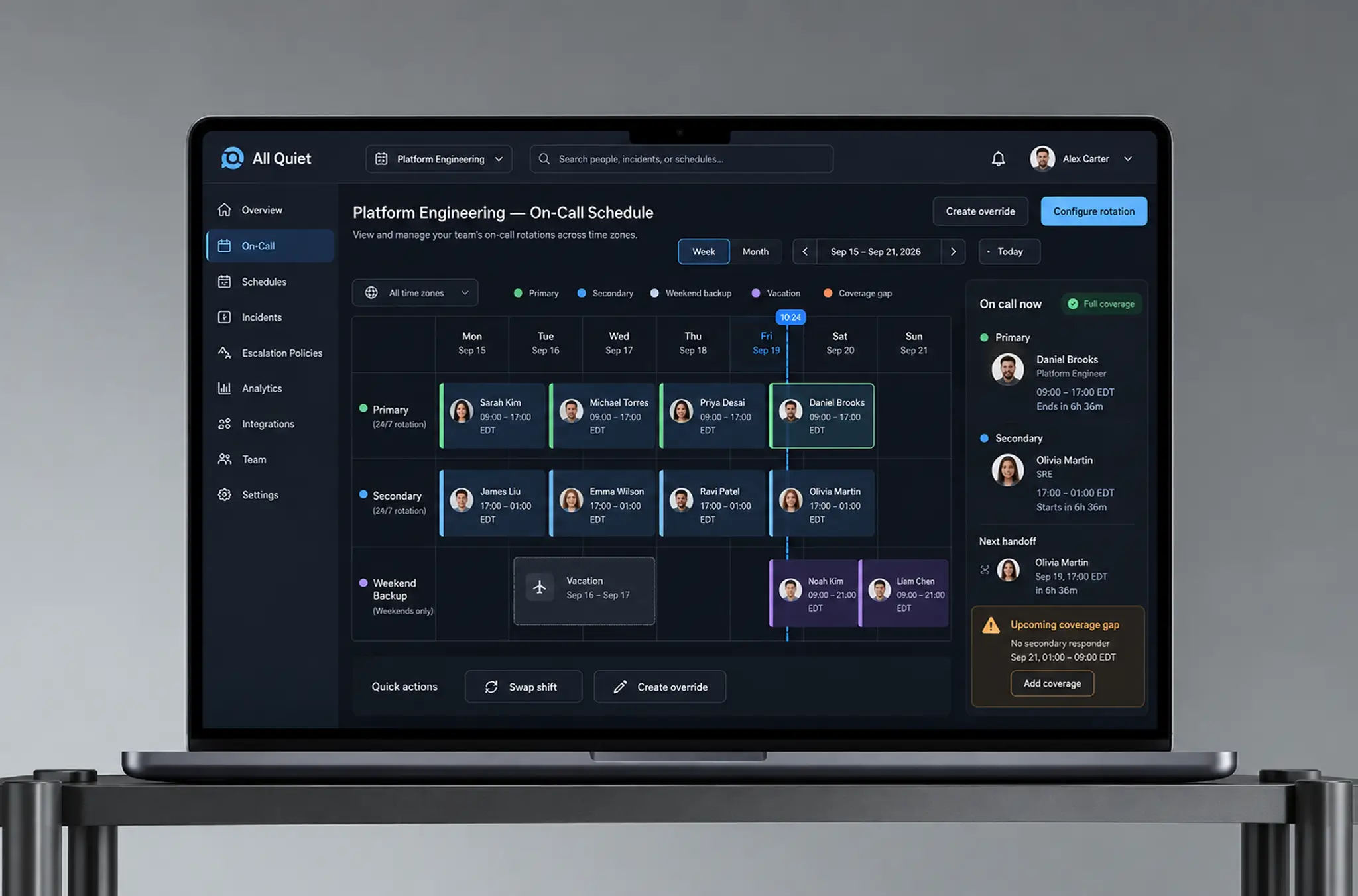
- Shift rotation and coverage: rotations were built by hand every month, and coverage gaps showed up only after an incident went unanswered.
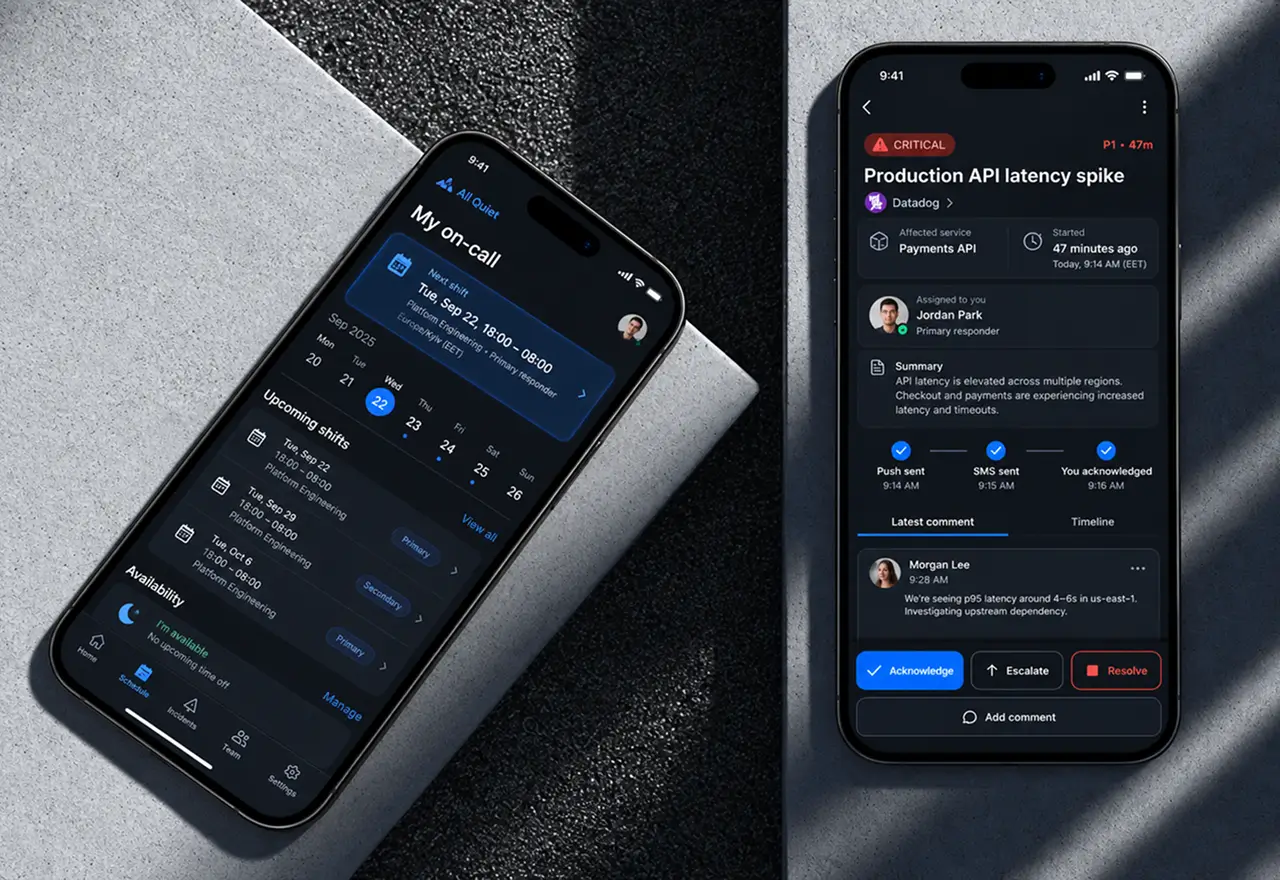
- Incident escalation: one push notification, silenced by Do Not Disturb, and no automatic escalation to a backup.
- Integrations: Datadog, Uptime Robot and email alerts arrived in different channels and formats, so engineers switched between four tools for one incident.
💡 Solutions
One question shaped every decision: at 3 a.m., how many taps should it take to know who is on call and to reach them? A Node.js scheduling engine with MongoDB and Redis, a React.js web dashboard and native iOS and Android apps:
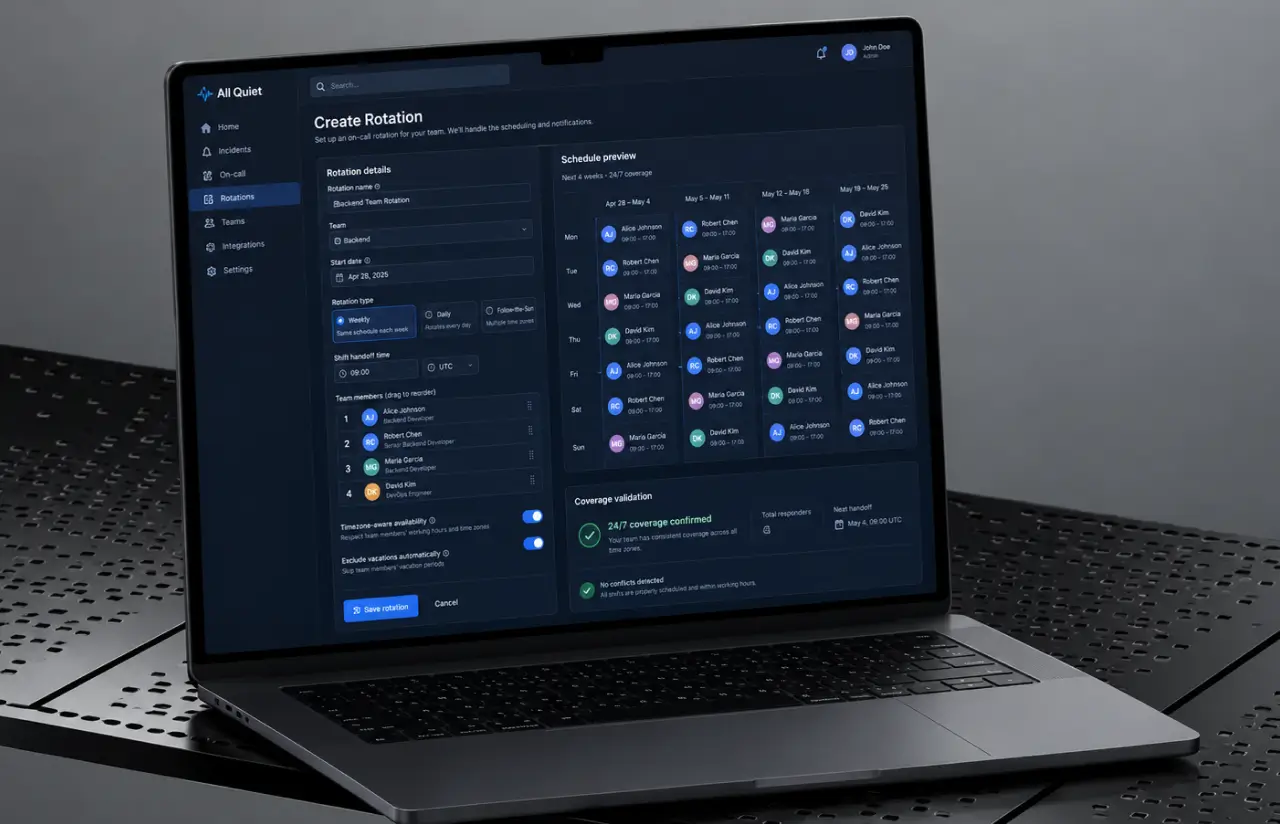
- Smart rotation management: weekly, daily or follow-the-sun rotations generated months ahead, with vacations and time zones.
- Multi-channel alerting: push, then SMS, then a voice call, with Critical Alerts on iOS and a Do Not Disturb bypass on Android.
- Shift swaps in two taps on mobile, with every override logged and synced to personal calendars.
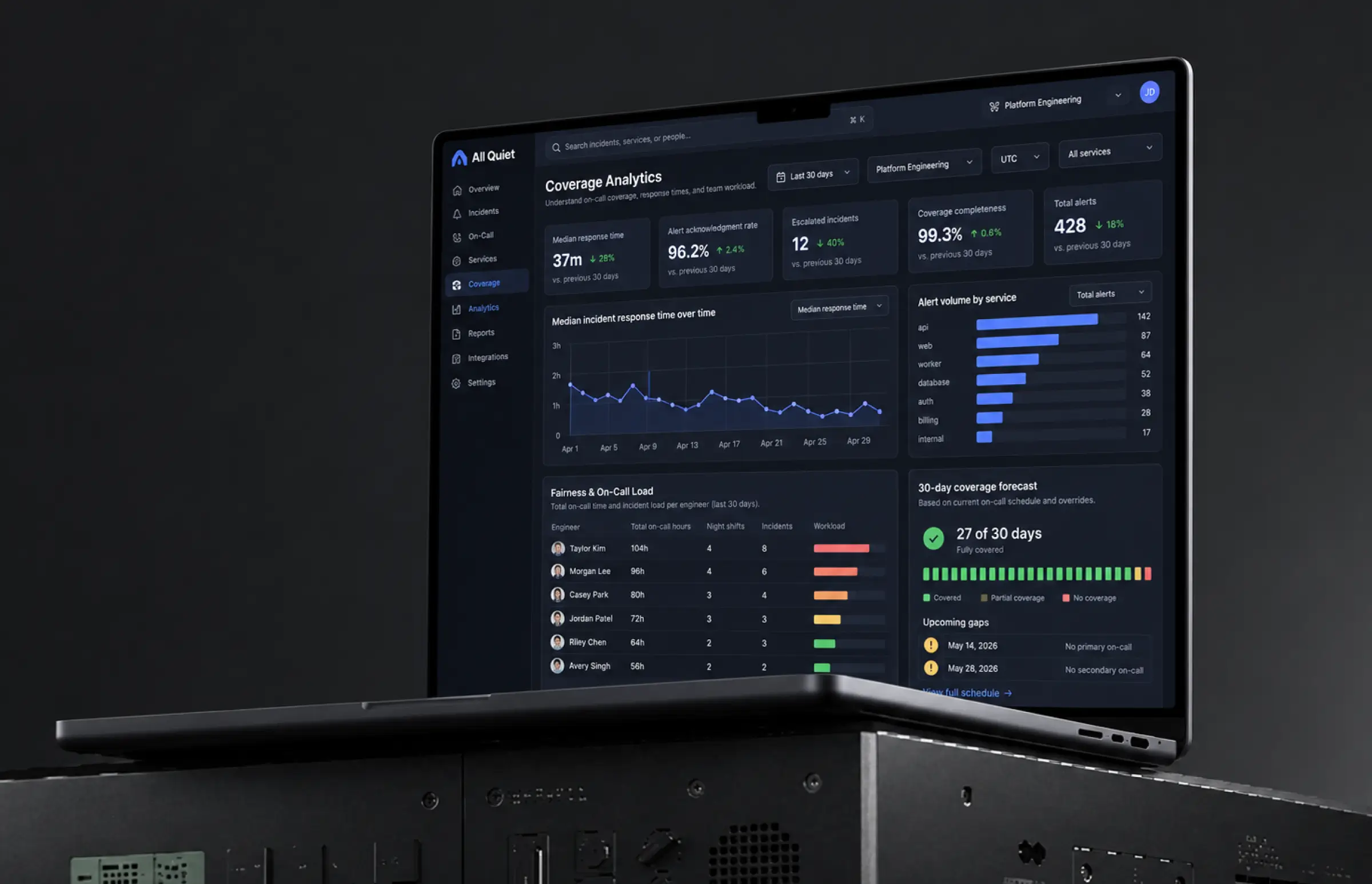
- Coverage analytics with weekly reports and a 30-day coverage gap warning.
- Integrations with Datadog, Uptime Robot, Slack and Microsoft Teams, plus Google, Microsoft and Apple sign-in.
8
people worked
10+
months of work
60%
faster incident response